Employment Alert – Changes to right to work checks: Home Office publishes draft Code and confirms changes will apply from 1 October 2026



What’s happening?
The Government has now published its response to the consultation on extending the right to work scheme, together with the draft updated Code of Practice on preventing illegal working.
As anticipated, the changes will take effect on 1 October 2026.
As we’ve previously reported, these reforms significantly expand the scope of the UK’s illegal working regime beyond traditional employment relationships.
From October 2026, right to work obligations will apply not only to employees but also to a wider range of arrangements, including:
- individuals engaged under worker contracts;
- individual consultants and contractors;
- online matching and platform-based business models;
- gig economy workers;
- zero-hours arrangements.
The draft Code of Practice provides some detail about the steps employers are required to take; however, we are still waiting for the final piece of the puzzle, which is an updated version of the Employer’s Guide to Right to Work checks. We will provide a further update once this has been published.
Why is this important?
These changes represent one of the most significant expansions of right to work compliance obligations in recent years. It expands the right to work regime to cover contractors, casual workers and platform‑based labour which is a workforce which has traditionally been seen as lower risk and less of an admin burden for businesses. This is going to change with the new regime.
Businesses that are not prepared for these changes will face an increased risk of illegal working penalties, which can be up to £60,000 per illegal worker.
The Home Office has indicated that it will generally seek to identify the organisation with the direct contractual relationship with the worker. However, where labour supply arrangements are more complex, if the direct employer cannot be identified or prescribed compliance safeguards have not been followed then liability may extend further up the chain.
The Code sets out detailed compliance safeguards which must be met when a business is not directly engaging with the person carrying out the work. These safeguards include:
- written statements of contractual terms and conditions in place before the work or service commences;
- contractual obligations requiring right to work checks;
- restrictions on unauthorised subcontracting and how substitutes are used;
- rights to carry out audits;
- obligations to cooperate with Home Office investigations; and
- enforcement provisions where illegal working is identified.
The draft Code also introduces a new requirement when substitutes are used. From October, businesses will be expected to have systems in place to verify that the individual undertaking the work is the same person whose right to work has been checked.
What should you do?
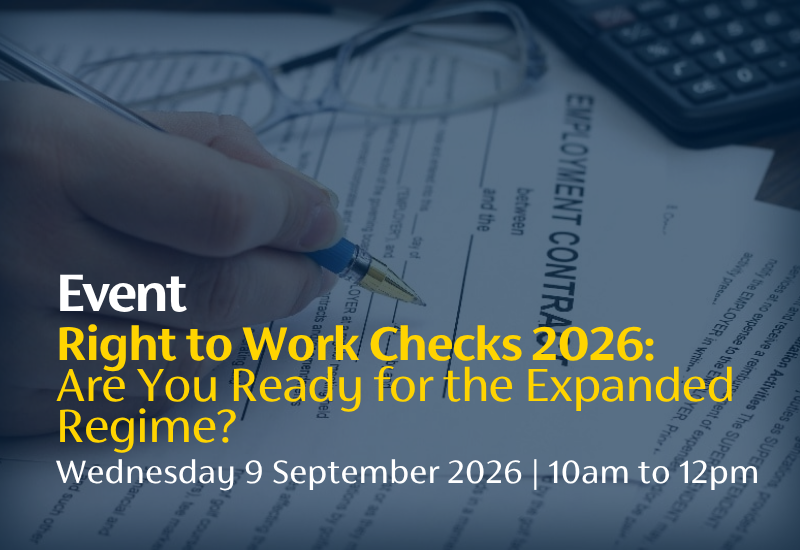
Training: We are running a specific training session to support clients with this change. Join us on Wednesday 9th September 2026 at our Southampton office for a two-hour session, designed to give you a clear, practical understanding of how the new regime will work in practice and how to ensure your internal processes are compliant. For more information and to book your space see: Right to Work Checks 2026: Are You Ready for the Expanded Regime? – Trethowans
Audit: Carry out an audit of your zero hours, casual and agency workers, consultants and contractors and other individuals to assess how many additional checks may be required and the operational impact so you can start to plan early.
Review: Review your onboarding and engagement processes for these groups of individuals and start planning how to implement the new requirements from 1 October 2026.
Advice: If you require specific advice relating to these changes, please contact our specialist immigration solicitors, Charlotte and Tabytha on [email protected].
All comments and information were accurate at the time of publication and may not reflect current developments. This should not be relied upon without seeking appropriate professional advice.